AI & Cloud · Enterprise Platform
Designing an AI Production Platform Before Anyone Knew What It Should Be
Virtual Studios reimagines digital media production using AI and cloud technology, helping creators work together in real time, manage assets effortlessly, and turn ideas into content without friction.

Role
Research, Wireframes,
Design System,
Dev Handoff
Team
1 Product Designer,
1 Creative Director
2 Product Managers,
15 Engineers
Duration
12 Weeks
Background & Problem
Traditional production studios relied on fragmented tools, manual coordination, and disconnected workflows that slowed production and increased operational complexity.
The lack of a centralized ecosystem created delays in collaboration, approvals, asset management, and scalable content delivery.
A centralized, AI-powered platform covering the full production journey — from script to final delivery. Cloud infrastructure, automation, and role-based collaboration in one place, so teams stopped losing time to handoffs between disconnected tools.
Process & Decisions
With no fixed brief, the first job was turning a moving target into a focused, buildable scope.
Ambiguous Requirements
Stakeholders kept adding features, so scope never stopped moving. We listed everything, then cut hard: ~40 requests down to 12 essentials the platform couldn't run without. The rest went to a parking lot for V2.


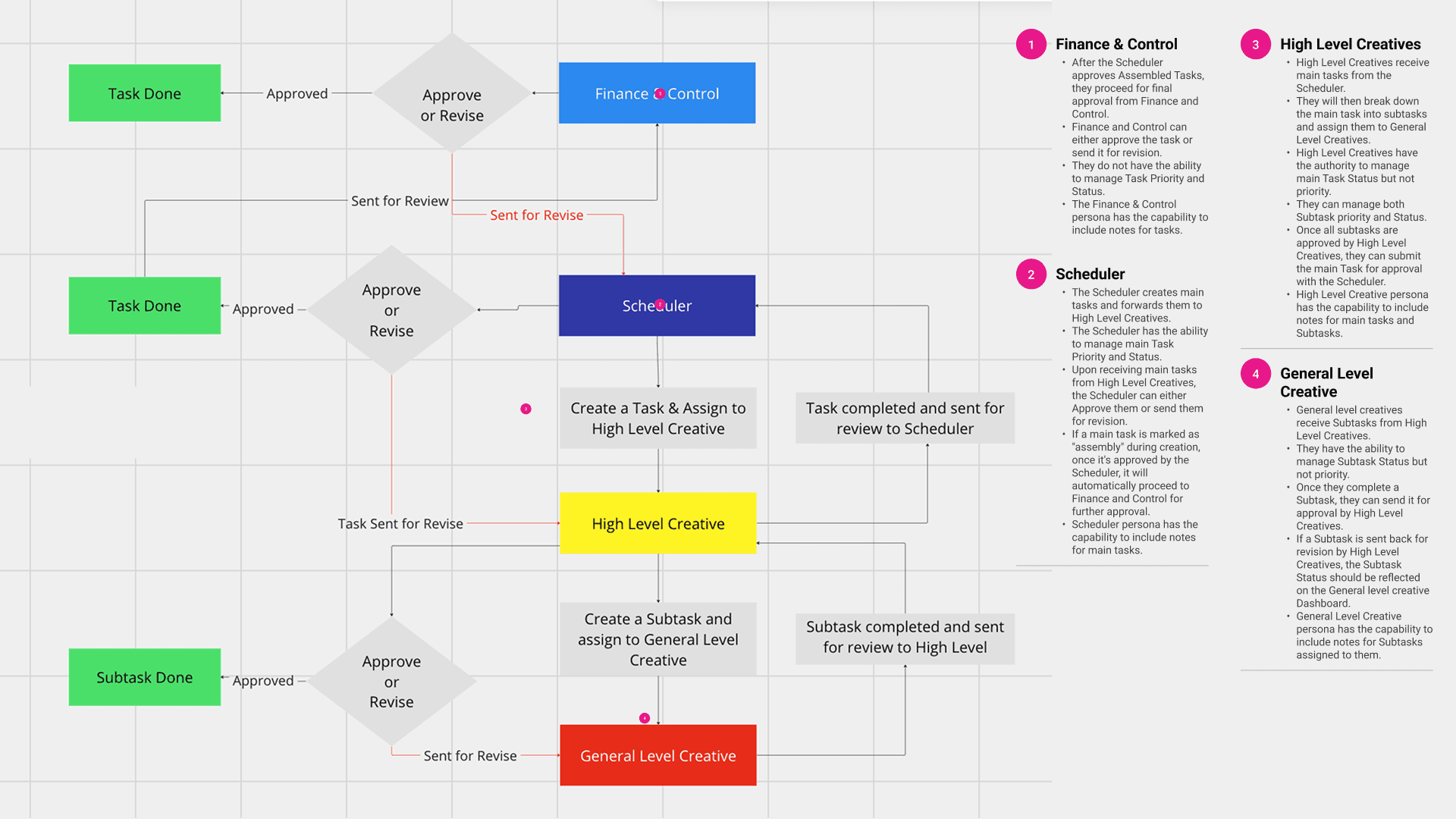
Key Features – Task Flow
Tasks are created by the Scheduler, assigned to High-Level Creatives, and further broken down into subtasks for execution.
Completed tasks move through structured review cycles across roles until final approval by Finance & Control.


Key Features – Integrated Creative Tool Ecosystem
A unified set of AI creative tools in one connected workspace — so teams could generate, manage, and collaborate on assets without leaving the platform.


Project Scope & Future Enhancements
Phase 1 delivered the core platform — the full production workflow in one place. Later phases would deepen automation, scale, and collaboration
Smart resource allocation based on workload and deadlines
Advanced AI-generated previews & scene simulations
Third-party integrations with creative tools and render engines
Real-time collaborative editing workflows
Enhanced security, audit logs, and enterprise governance features
Impact & Learnings
As the sole designer with 15 engineers, I owned the design of a complex, role-based system end to end — workflows, permissions, approvals, and the structure to scale it.
We designed for real-time AI media generation, and the models weren't there yet. Rendering was too slow for the seamless flow the platform assumed. The design was right for where the tech was heading — it just hadn't arrived. On the next AI project, I'd pressure-test model performance early, not discover it at the end.